
July 20, 2026
Testosterone and Sleep: Why Rest Is Your Most Underrated Lever
Most of your testosterone is produced while you sleep - so poor sleep is one of the fastest ways to tank it. Here is how sleep and testosterone are connected, what the research shows, and how to fix it.
If you want one free, high-impact way to support testosterone, it is sleep. The majority of your daily testosterone is released during sleep - which makes poor or short sleep one of the fastest ways to lower it. Here is the connection and how to fix it.
Why sleep drives testosterone
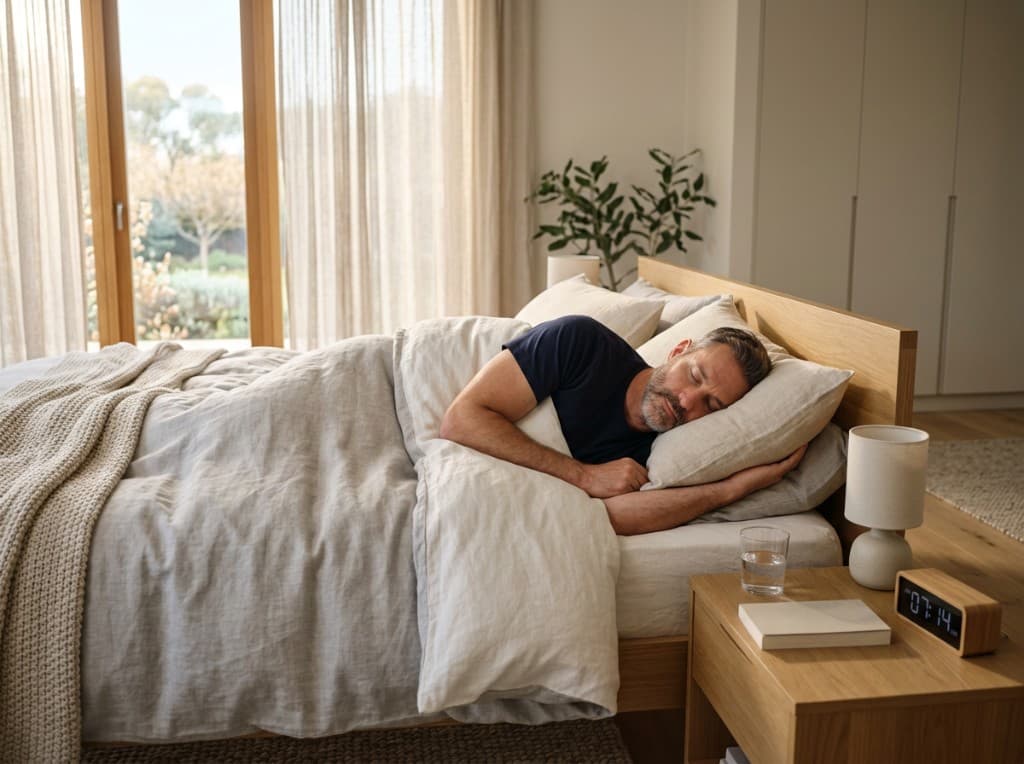
Testosterone follows a daily rhythm, rising during sleep and peaking in the morning. This release is tied to your sleep cycles, so when sleep is cut short or fragmented, that production window shrinks. Studies have shown that even one week of restricted sleep can meaningfully lower daytime testosterone in healthy young men - and the effect tends to be worse with age.
The vicious cycle
Low testosterone can itself worsen sleep quality, and poor sleep raises cortisol, which further suppresses testosterone. It is easy to get stuck in a loop of bad sleep, high stress, and flat hormones - which is why sleep is often the first thing to fix.
How to protect your sleep
- Aim for 7-9 hours and keep a consistent schedule, even on weekends.
- Keep the room cool, dark, and quiet.
- Cut screens and bright light in the last hour before bed.
- Limit alcohol and late caffeine - both fragment deep sleep.
- Get morning daylight to anchor your circadian rhythm.
Where supplements fit
No testosterone supplement can out-run chronic sleep deprivation. Fix sleep first; then a stack like Critical T can add modest support. Interestingly, its lead ingredient Tongkat Ali is studied partly for stress-related benefits, which ties back to better rest. See the broader natural ways to boost testosterone guide.
FAQ
Does lack of sleep lower testosterone?
Yes. Because most testosterone is produced during sleep, short or poor-quality sleep reduces it. Research shows even a week of restricted sleep can lower daytime testosterone in healthy men.
How many hours of sleep do I need for healthy testosterone?
Most men do best with 7-9 hours of consistent, good-quality sleep. Regularity and depth matter as much as total hours.
Will fixing my sleep raise my testosterone?
If poor sleep was suppressing your levels, improving it can help restore them over time. It is one of the most reliable, no-cost ways to support healthy testosterone, though results vary by individual.
Authoritative references (education)
Independent references for core definitions and labeling-not a substitute for your clinician’s judgment about your case.
More Critical T guides
Keep exploring our independent Critical T coverage, or jump straight to pricing and the guarantee.
- Critical T and Hair Loss: Should You Be Worried?
Will a testosterone supplement like Critical T cause hair loss? It's a common worry tied to DHT and male pattern baldness. Here's an honest look at the science, the real risk, and what the formula actually does.
Read article → - Is Critical T FDA Approved? What That Really Means
Is Critical T FDA approved? The short answer is no - but that's true of every dietary supplement, and it doesn't mean what most people think. Here's how FDA regulation of supplements actually works.
Read article → - How to Cancel a Critical T Subscription (and Get a Refund)
Subscribed to Critical T and want out, or want a refund under the guarantee? Here is a clear, practical walkthrough of canceling the subscription, using the 60-day money-back guarantee, and avoiding common mistakes.
Read article → - Critical T for Libido and Sex Drive: What to Realistically Expect
Low libido is one of the most common reasons men try a testosterone supplement. Here is an honest look at whether Critical T can help sex drive, why its ingredients are relevant, and what's realistic.
Read article →